

Pluralism Is the Opiate of the Masses
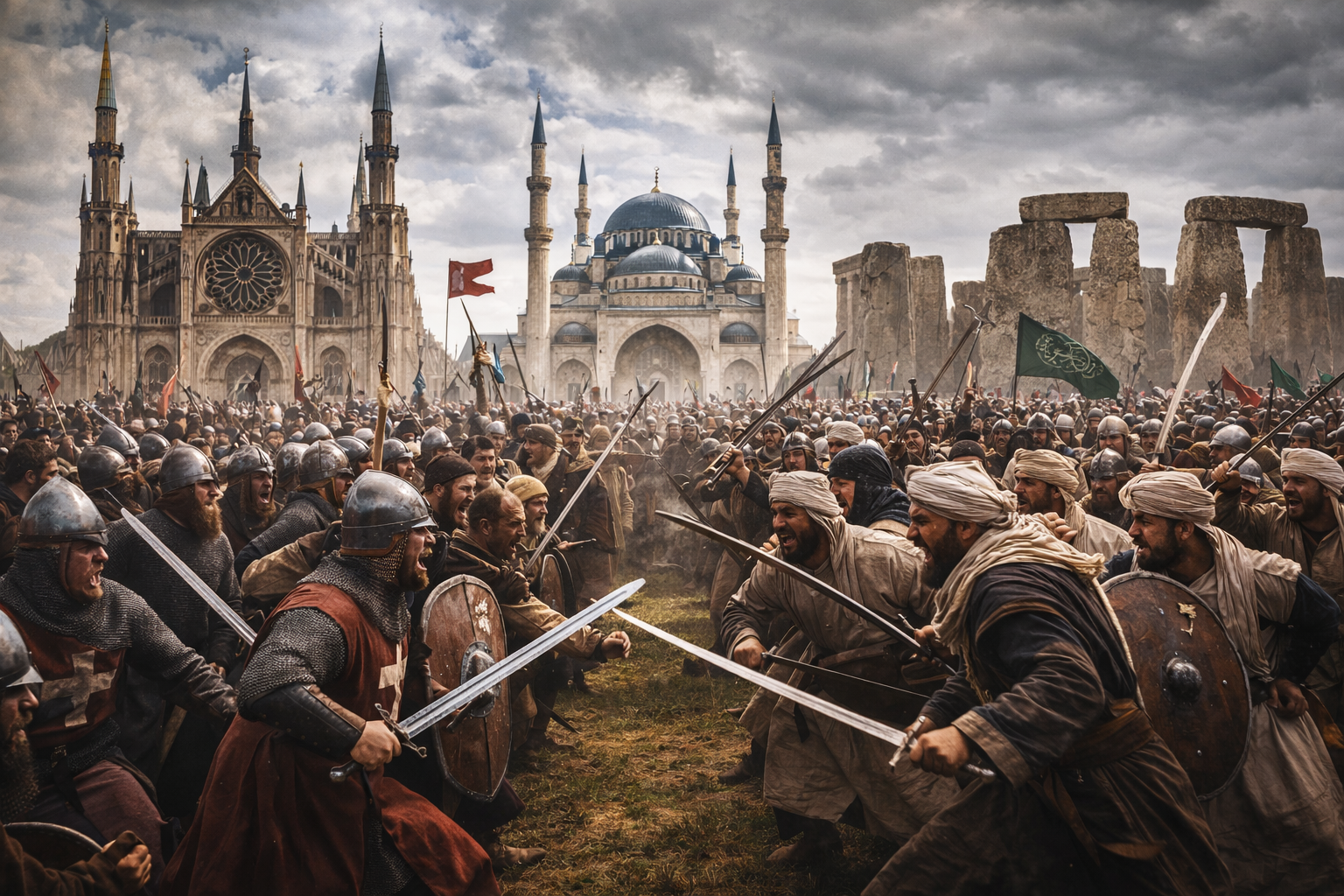
I keep coming back to an uncomfortable thought that pluralism, and not religion, might be the opiate of the masses.
For some, pluralism provides a joyful hallucination; a vision of the "melting pot" country that feels real enough to live inside. For others, it is the root of cultural decline, the thing that has "ruined" the country. Either way, pluralism becomes myth before it becomes practice.
The hopeful version
Legal scholar John Inazu offers a careful, hopeful framing of what pluralism could be. Writing in his Substack Some Assembly Required, he draws a distinction between pluralism as the "fact of difference," the reality that we disagree about things that genuinely matter, and pluralism as a response to that difference. His concept of "confident pluralism" asks for something demanding of us: humility, patience, and persuasion rather than coercion. It assumes that institutions can name their own purpose, hold their own convictions, and still make room for others. It's an architecture for coexistence that doesn't require anyone to disappear.
It's a compelling vision. But then history steps in.
The lived version
Maxine Hong Kingston's China Men (1980) tells the story of Bak Goong, a Chinese laborer who comes to Hawaii in the 19th century. He does not arrive in a pluralistic democracy. He arrives on a plantation. He comes because he is sold a Gold Mountain dream, the opportunity of a lifetime—but the truth is, he is really just sold.
Kingston's story captures something the theoretical framework of pluralism tends to skip over: the United States has always relied on enslaved peoples and immigrants while simultaneously despising them. The labor is wanted. The people are not. In this telling, pluralism is not an ideal held out to newcomers. It is a condition forged through exploitation. It is something endured, not offered.
And yet.
Once people have bled into the soil somewhere, it becomes very hard to erase them. Against what might be called a white, Puritan hope for cultural purity, these immigrants become part of the very physiology of America. They plant pomelo and bitter melon. They build dragons from rags and shards. They hold shout parties and refuse to be reduced to "oxen." Their presence cannot be tidied away.
What pluralism actually costs
If Inazu gives us the architecture of pluralism, Kingston shows its cost. These two perspectives are in tension more than opposition. Pluralism is not harmony. It is endurance. It is the stubborn fact that difference persists, even when the system would prefer silence.
The possibility of America, and perhaps the possibility of any honest community, does not lie in the fantasy of the melting pot. It lies in what cannot be erased.
That is a harder thing to hold than a vision of harmony.
Sources
Inazu, John. "Pluralism, Particularity, and Possibility." Some Assembly Required, 1 Apr. 2025. johninazu.substack.com
Kingston, Maxine Hong. "The Great Grandfather of the Sandalwood Mountains." China Men, Alfred A. Knopf, 1980.
Yvé Dizes is the founder of HUM School of Mysticism and The Spiritual Concierge. Her academic work explores consciousness, relational ethics, and the cultural politics of spiritual practice.